

Curriculum & Assessment
At Northwood Academy Charter School (NACS), we believe every student deserves a rigorous, engaging, and supportive educational experience that builds the knowledge, skills, confidence, and habits needed for future success. Our curriculum is aligned with the Pennsylvania Academic Standards and is designed to provide students with a strong academic foundation while responding to their individual learning needs.
Our Curriculum
NACS provides a comprehensive academic program that emphasizes strong core instruction, meaningful student engagement, and high expectations for all learners. Teachers use research- and evidence-based instructional practices, adopted curriculum resources, collaborative planning, and ongoing assessment to create learning experiences that are appropriately challenging and responsive to student needs.
Our curriculum promotes both academic achievement and growth. Across grade levels, students are expected to develop increasingly sophisticated skills in reading, writing, mathematics, science, and social studies while learning to think critically, communicate effectively, solve problems, and apply their learning in meaningful ways.
Literacy
Strong literacy skills are essential to success in every subject. NACS places particular emphasis on foundational literacy in the early grades and the continued development of reading, writing, vocabulary, comprehension, and communication skills throughout the K–8 program.
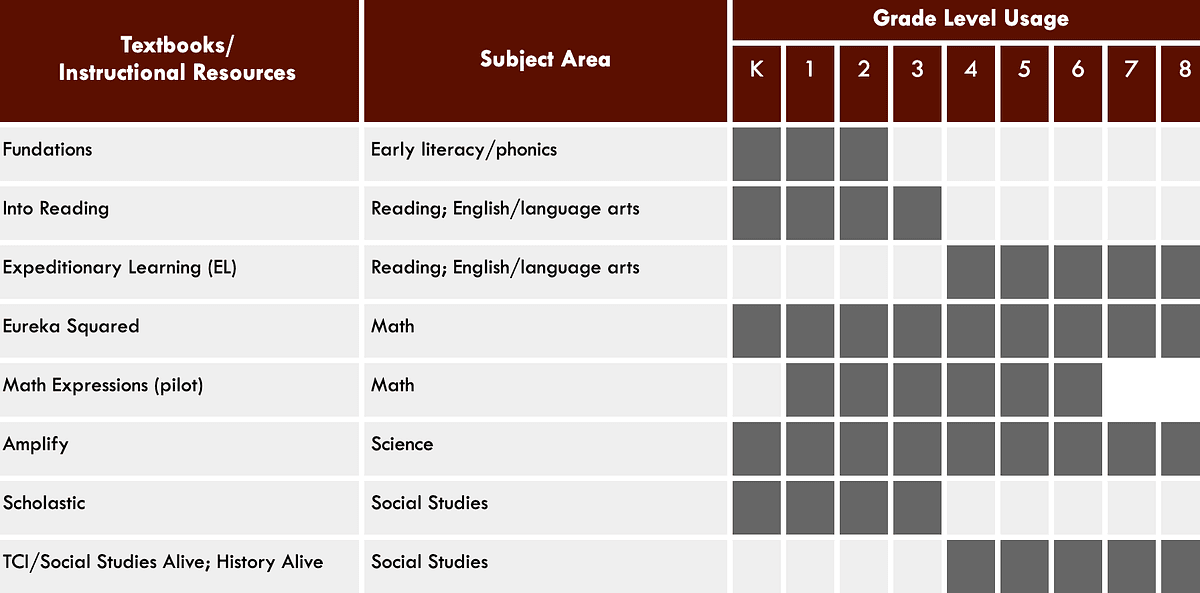
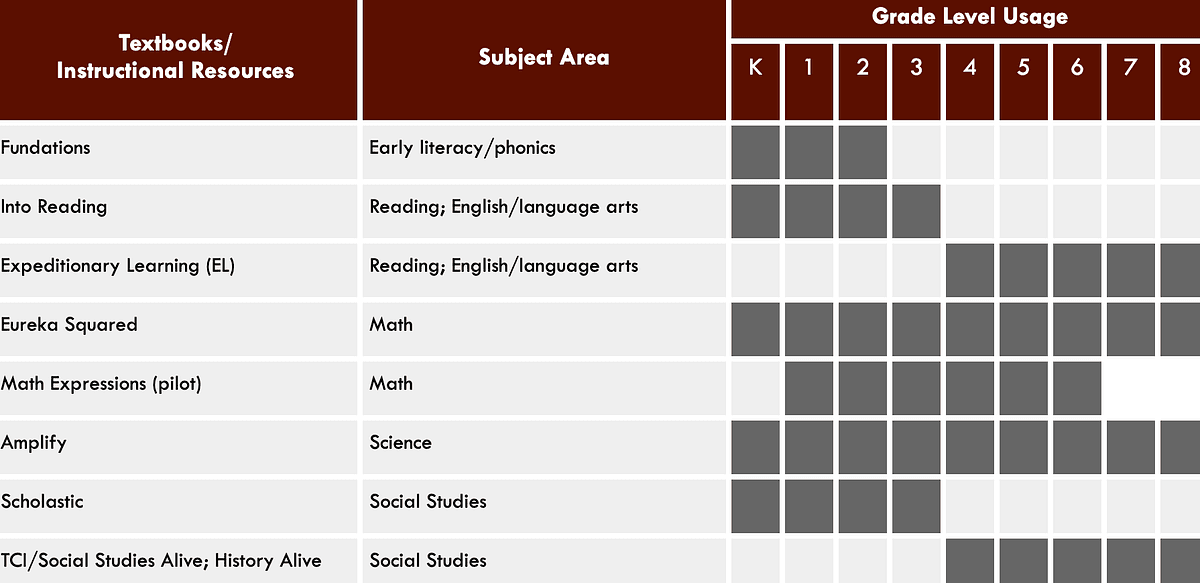
In the primary grades, NACS uses Fundations in Grades K–2 to provide systematic instruction in foundational reading skills, including phonemic awareness, phonics, decoding, spelling, and handwriting. Into Reading is used in Grades K–3 to support the development of reading comprehension, vocabulary, fluency, writing, and knowledge-building.
As students progress through the grades, literacy instruction increasingly emphasizes close reading, analysis, evidence-based writing, research, discussion, and the comprehension of increasingly complex texts. Writing is an important component of instruction across grade levels and content areas.
Mathematics
Mathematics instruction at NACS focuses on developing both strong foundational skills and deep conceptual understanding. Students learn to apply mathematical reasoning, solve problems, communicate their thinking, and make connections among mathematical concepts.
Teachers use assessment information to identify students' strengths and areas for growth, differentiate instruction, provide additional practice or enrichment, and determine when targeted small-group instruction or intervention may be needed.
Science and Social Studies
Science and social studies instruction helps students build knowledge about the natural world, history, geography, civics, and society. Students are encouraged to ask questions, investigate ideas, analyze information and evidence, communicate their thinking, and make connections between classroom learning and the world around them.
Across all content areas, NACS strives to create classrooms in which students are active participants in their learning and are appropriately challenged and supported.
Assessment: Understanding Student Learning
Assessment at NACS is not simply about giving students tests. It is an ongoing process that helps teachers understand what students know, what they are ready to learn next, and where additional support or enrichment may be needed.
NACS uses multiple measures of student learning rather than relying on a single assessment. These measures include classroom formative assessments, curriculum-based assessments, universal screeners, benchmark assessments, progress-monitoring measures, common assessments, and Pennsylvania state assessments.
Together, these sources of information provide a more complete picture of student achievement and growth.
Universal Screening and Benchmark Assessment
NACS administers assessments at key points during the school year to monitor student progress and identify instructional needs.
DIBELS is used as a universal literacy screener in Grades K–3. DIBELS provides teachers with information about the development of important early literacy skills and helps identify students who may benefit from additional instruction or intervention.
LinkIt Benchmark Assessments are used in Grades 3–8. Benchmark results provide teachers and school leaders with standards-aligned information about student performance and help identify areas of strength, instructional priorities, and opportunities for reteaching, intervention, or enrichment.
NACS also uses additional diagnostic, curriculum-based, common, and formative assessments as appropriate to understand student learning and guide instruction.
Pennsylvania State Assessments
As a Pennsylvania public charter school, NACS participates in state-required assessments, including the Pennsylvania System of School Assessment (PSSA) in applicable grades and subjects.
State assessment results provide one measure of student achievement in relation to Pennsylvania Academic Standards. NACS reviews PSSA results together with growth information, benchmark assessments, classroom performance, and other measures rather than viewing state assessment results in isolation.
Using Data to Improve Instruction
Assessment is most valuable when the information leads to action.
Teachers and school leaders regularly review student learning data to identify strengths, determine instructional priorities, plan lessons and small-group instruction, monitor progress, and provide additional support when needed.
Our instructional cycle can be summarized as:
Analyze → Plan → Instruct → Assess → Respond
Through collaborative planning and data meetings, educators examine patterns in student performance and determine appropriate next steps. Those next steps may include reteaching a concept, adjusting instructional strategies, providing targeted small-group instruction, increasing the level of challenge, or providing additional intervention or enrichment.
Multi-Tiered System of Supports (MTSS)
NACS uses a Multi-Tiered System of Supports (MTSS) to help ensure that students receive instruction and support matched to their needs.
Strong, evidence-based Tier 1 instruction in the general education classroom is the foundation of our academic program. When assessment data indicate that a student needs additional support, teachers and support staff may provide targeted interventions, additional small-group instruction, reteaching, or increased opportunities for practice.
Student progress is monitored so that educators can determine whether supports are working and make adjustments when necessary. This process allows NACS to respond proactively to student needs while maintaining high expectations for every learner.
A Continuous Cycle of Improvement
Curriculum and assessment at NACS are part of a larger commitment to continuous improvement. Teachers and school leaders examine student achievement and growth data, review the effectiveness of instructional programs and interventions, collaborate around student needs, and refine instructional practices based on evidence.
This work also informs professional learning, instructional coaching, curriculum review, resource decisions, and schoolwide academic priorities.
Most importantly, curriculum and assessment serve the same purpose: to help every NACS student learn, grow, and achieve at increasingly high levels.